

Wash up done…..and relax!
But, the water was still warm when you noticed.
Hands pruned.
Tea towel already damp.
Cupboard doors closed with that soft, satisfied thought that says: job done.
You sat down.
And then you saw it.
A mug.
On the bedside table.
Brown ring. Dried foam. Silent. Judging.
The kind of mug that doesn’t shout or fall dramatically.
It just waits.
Patient. Confident. Certain you’ll be back.
You stare at it longer than you should, weighing the options.
Ignore it and hope future you deals with it.
Or stand up, sigh louder than necessary, and head back to the sink.
What makes this irritating isn’t the mug.
It’s the realisation that you already finished.
You didn’t rush.
You didn’t cut corners.
You did the work properly.
Just… not completely.
And that’s the sting.
Because doing something twice doesn’t feel like extra effort.
It feels like effort that shouldn’t have been necessary.
The frustrating part isn’t missing the mug.
It’s realising you were confident enough to stop and that confidence was premature.
That same feeling shows up at work, just with spreadsheets instead of crockery.
You clean the data.
Structure it.
Start thinking. Analysing. Drawing early conclusions.
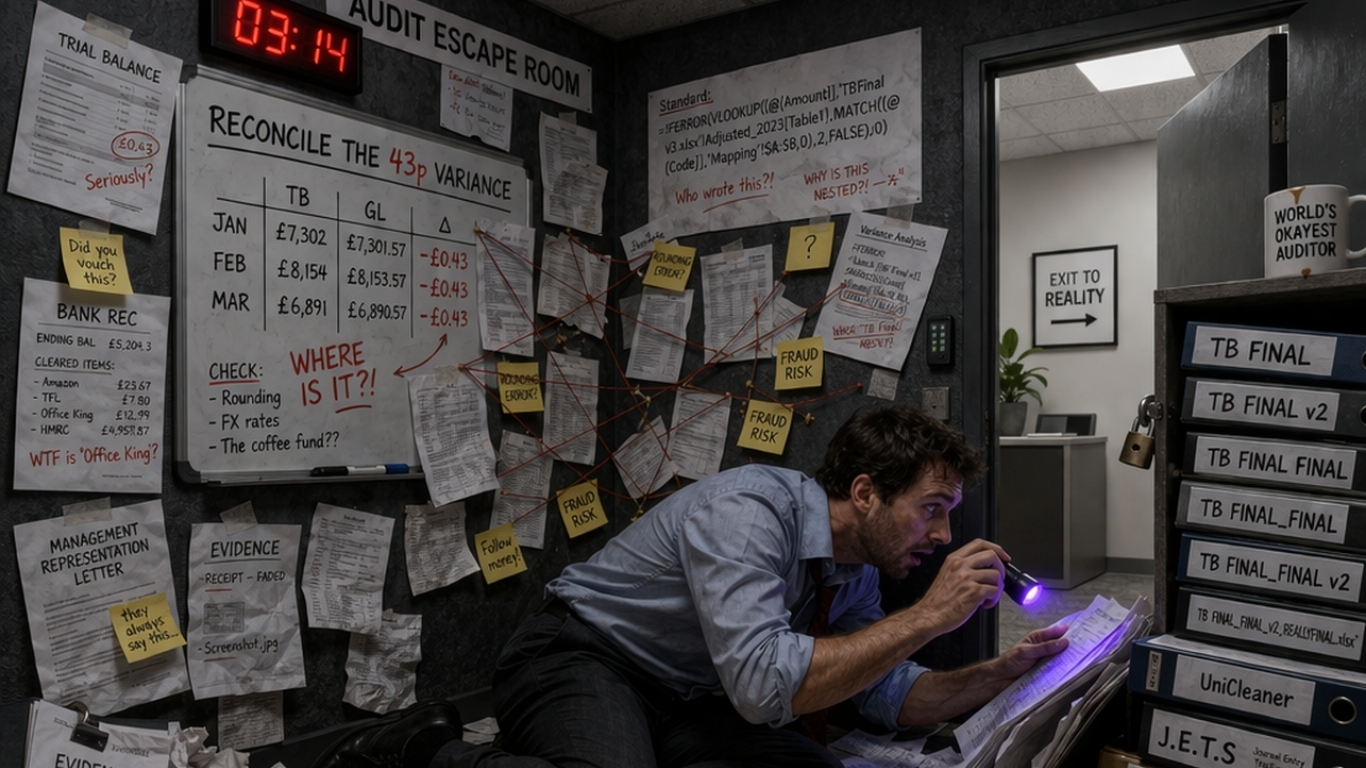
Only to discover later that another extract exists……just one more TB from the client
Another format.
Another “oh, we forgot to mention” file that didn’t make it into the first round.
Even when everything finally is there, it’s rarely usable straight away.
Different shapes.
Different labels.
Different rhythms.
The work doesn’t start when the data arrives.
It starts when it finally makes sense.
Now the thinking you’ve already done has to be revisited.
The judgement softened.
The confidence slightly shaken.
Not because anything was wrong.
But because you started before everything was on the table.
Here’s the uncomfortable truth auditors rarely say out loud:
Most rework isn’t caused by mistakes.
It’s caused by incomplete starts.
Starting before all the information is present feels efficient in the moment.
It almost never is.
UniCleaner exists for that pause before momentum kicks in.
Before analysis.
Before judgement.
Before anyone starts “making progress”.
It forces a quiet but important question:
Do we actually have everything?
Every ledger.
Every system.
Every format.
Only once that answer is yes does the work begin.
Not to make you faster but to make sure the work you do doesn’t unravel later.
Practical audit takeaway:
Before opening a single pivot table, force one deliberate step: confirm scope. One source of truth. One structure. One start line. It saves more time than any shortcut ever will.
Because the most efficient audits aren’t the quickest.
They’re the ones that don’t send you back to the sink.
Until next time,
Christiaan
P.S. If this one hit close to home, reply and tell me about your missing mug. I promise you’re not alone.
.png)









































































.png)
.png)
.png)


.png)
.png)
.png)







Help your team work faster in Microsoft Excel without
sacrificing control, traceability, or audit quality.
Inspiration not perspiration with tips and insights to audit smarter, straight to your inbox.
You can unsubscribe at any time. We respect your information and won’t share your data with any 3rd parties. Learn more about our privacy policy.

.svg)

.png)
