
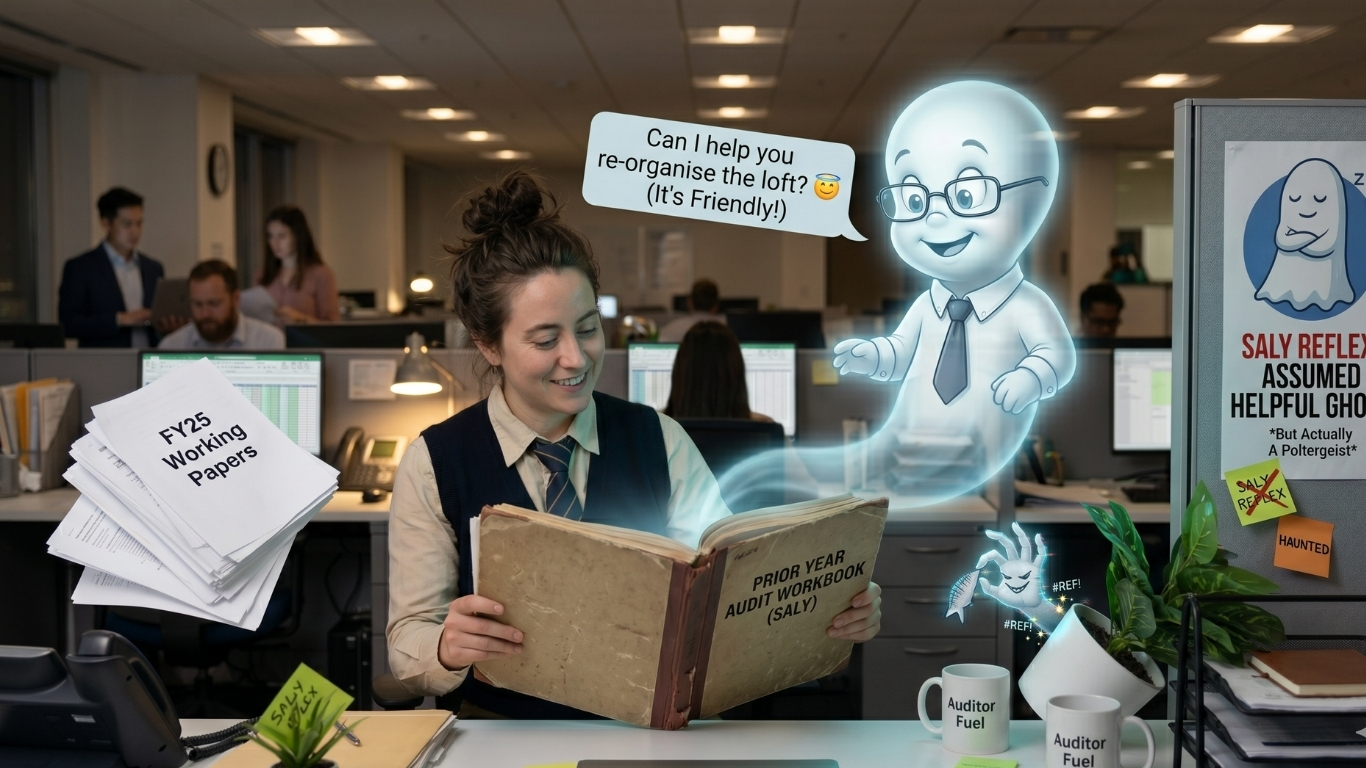
The tracking lines on the VHS tape flicker, the static clears, and there he is. A translucent, oversized bowling ball of a boy floating through a dusty mansion, trying his absolute best to be helpful.
If you grew up in the 90s, Casper the Friendly Ghost did more than just entertain you on a Saturday morning. He instilled a deeply flawed sense of security in an entire generation.
The film made us believe that if a spirit was lingering in our house, it probably just wanted to make us a bacon butty. It would politely reorganise the loft, scare away the local bullies, and generally act as an unpaid, ethereal housemate. It was a brilliant cinematic lie. We romanticised the haunting.
But let’s be brutally honest for a second. If you wake up in the middle of the night to get a glass of water, and a translucent entity is hovering over your kitchen island holding a fish slice, you aren't feeling a warm wave of nostalgia. You aren't asking it to put the kettle on. You are sprinting out the front door in your socks and abandoning your mortgage forever.
The great illusion of nostalgia is that we assume the things left behind from the past are automatically there to help us. In reality, old ghosts are chaotic, highly unpredictable, and usually break the fine china the second you turn your back.
We know this is true in life. Yet, we completely forget it the second we sit down at our desks to start a new file.
Last month, we all had a collective epiphany. We looked at our daily routines, realised we were doing entirely too much work, and vowed to simplify. We were brave. We were visionaries. Then, Monday morning arrived. We stared at a blank screen, the pressure of a looming deadline hit, and muscle memory completely hijacked our new mindset.
Instead of keeping things simple, we retreated to the haunted house.
We opened the prior-year workbook, and we assumed the ghost was friendly. We looked at a 27-tab Excel behemoth held together by Sellotape, blind hope, and a custom macro built by someone who left three years ago to become a yoga instructor and we treated it like a sacred, helpful entity. We rolled it forward, trusting it just wanted to help us get through the week.
This is the ultimate "Same As Last Year" (SALY) reflex. We fall back on bad habits because dealing with a familiar haunting feels safer than building something new.
But legacy spreadsheets are rarely friendly. They are poltergeists.
The exact moment you paste the current-year trial balance into the "Data Drop" tab, the illusion shatters. A #REF! error flies across the screen like a thrown plate. Circular references start spinning violently out of control. Links to external workbooks you don't even have access to suddenly sever. The entire file crashes dramatically at midnight, right before the final review.
We are terrifying our teams by forcing them to work inside haunted methodology. It drains their cognitive battery, destroys their weekends, and leaves reviewers completely blind to how the numbers were actually derived. Relying on SALY feels like the safest option, but building on top of a fragile, inherited foundation is just hoping the house doesn't collapse while you're standing in the living room.
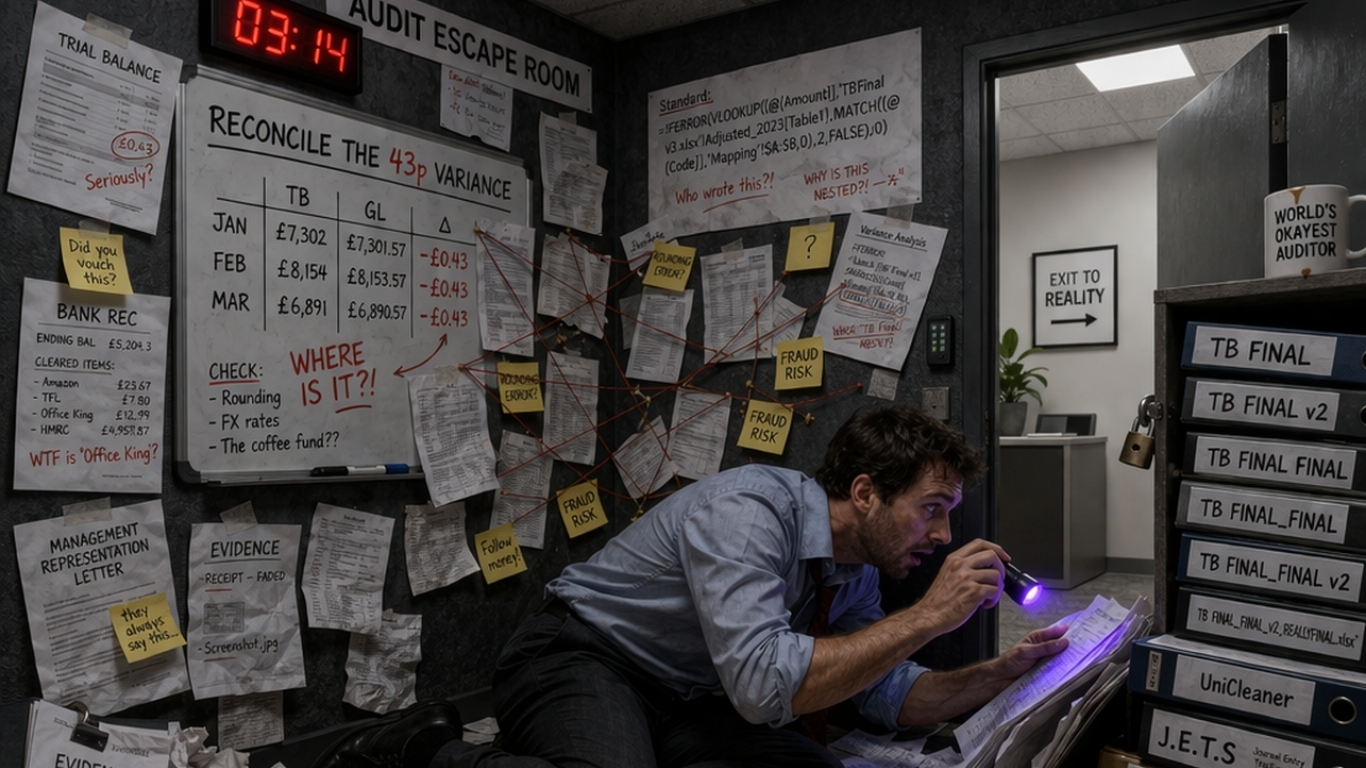
Here is the uncomfortable truth: formatting unstructured data and repairing broken links isn't professional analysis. It is an exorcism.
It takes significantly less time to build a clean process from scratch using modern, native tools than it does to decipher what the ghost of a past employee was thinking in a sleep-deprived panic.
The loft of your methodology doesn't need to be a place of fear. The foundation is already there.
The only question is: will you keep trying to make friends with the ghost of last year, or are you finally ready to turn on the lights?
Until next week,
Christiaan
.png)

































































.png)
.png)
.png)


.png)
.png)
.png)







Help your team work faster in Microsoft Excel without
sacrificing control, traceability, or audit quality.
Inspiration not perspiration with tips and insights to audit smarter, straight to your inbox.
You can unsubscribe at any time. We respect your information and won’t share your data with any 3rd parties. Learn more about our privacy policy.

.svg)

.png)
