
You are standing in your kitchen at midnight.
The house is completely silent.
You lean down and whisper the words "air fryer" to your houseplant.
Three minutes later, your phone vibrates.
It’s a sponsored Instagram ad for a stainless-steel, dual-basket Ninja Air Fryer with rapid-crisp technology.
You don’t just scroll past it.
You go full MI5.
By 2:00 AM, the blue light of your laptop is burning your retinas.
You are forty pages deep into a Reddit forum.
You are frantically cross-referencing your smart fridge’s Wi-Fi router with the microphone permissions of a sketchy Sudoku app you downloaded in 2017.
You have a mental corkboard, a spool of red yarn, and the manic energy of a person who has seen too much.
You have absolutely no hard proof that your appliances are colluding against you.
You just have a targeted ad and pure paranoia.
But human nature dictates that when we lack one clean, undeniable fact, we overcompensate.
We connect a hundred irrelevant ones.
We build a massive web of context.
We hope that if a story is complicated enough, it will eventually become the truth.
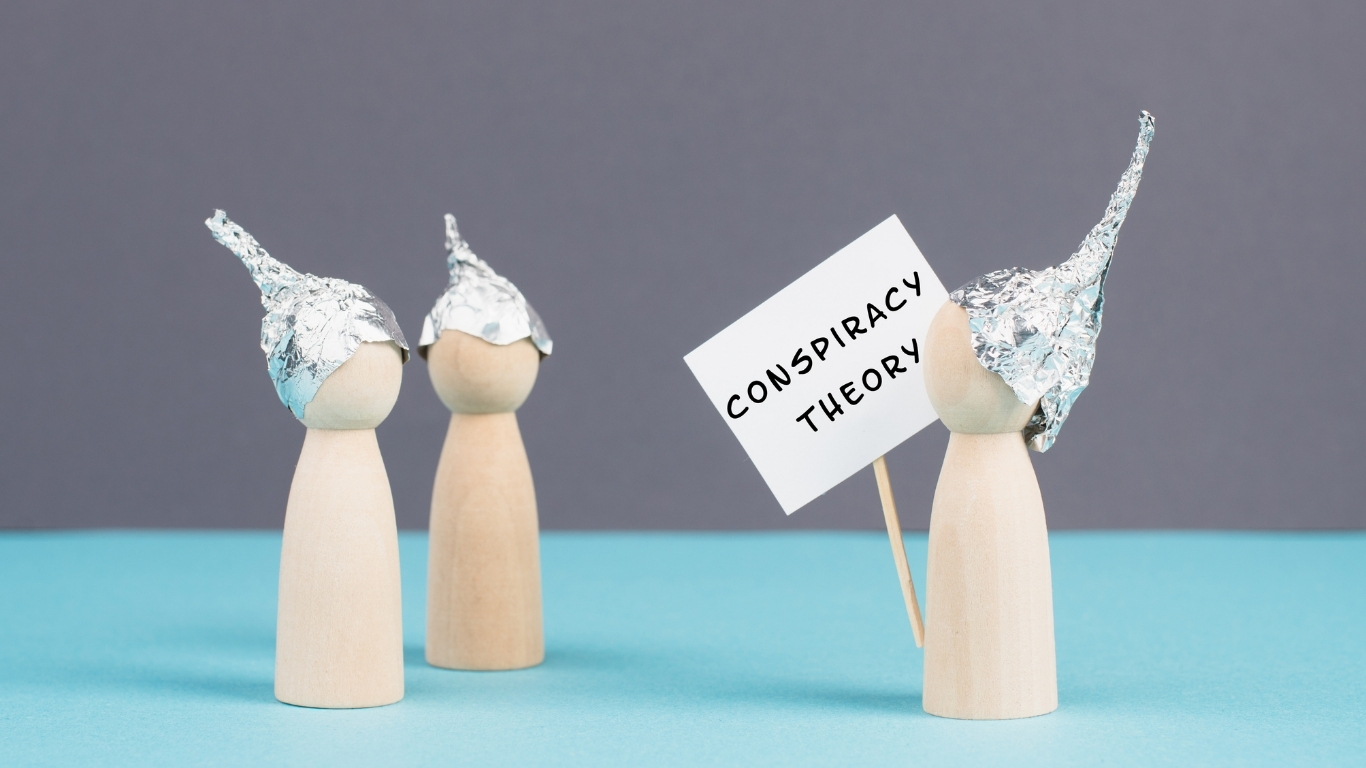
We laugh at the tinfoil hats.
And then we log into the audit file and do the exact same thing.
You open a file to test Accuracy.
The objective is beautifully, ruthlessly simple: Does this number agree to reliable evidence?
But the source document is a blurry PDF from three years ago.
The variance makes zero sense.
The client’s explanation is a vague shrug buried at the bottom of an email thread from a bloke named Craig who resigned last Tuesday.
Panic sets in.
You don’t have the proof.
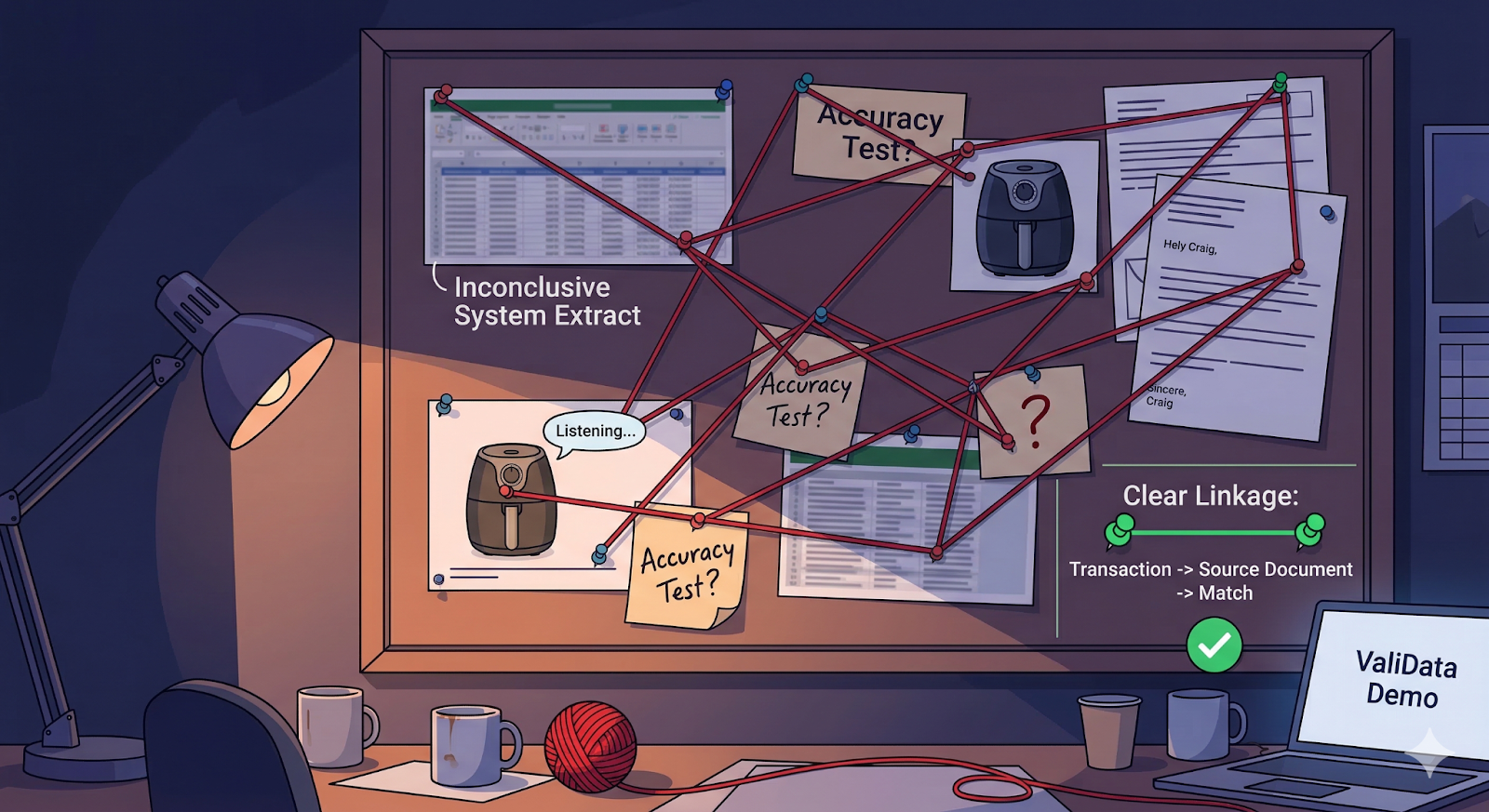
So, you build a corkboard.
You attach three conflicting system extracts.
You drop in a screenshot of an invoice that spiritually relates to the balance.
You write a dense, nine-page memo explaining the “historical context” of the account.
You throw in two disclaimers and a paragraph "just in case."
You throw a wall of text at the reviewer.
Why?
Because during busy season, we trick ourselves into believing that complexity is a badge of honour.
We think volume equals validity.
We hope the reviewer will mistake our sheer exhaustion for actual assurance.
But a nine-page memo doesn't prove accuracy.
It proves panic.
Safety doesn’t come from volume.
It comes from clarity.
When your objective is clear, documentation shrinks naturally.
Accuracy lives and dies on clean linkage: Transaction → Source Document → Match.
When that chain is visible, the red string disappears.
Memos shrink.
The noise gets quieter.
You aren't cutting corners; you are cutting noise.
If your conclusion can’t be explained in two calm sentences, the issue isn’t length. It’s focus.
If it takes five attachments to prove one number is accurate, stop connecting dots that don't exist.
Go back to the client and get the right document.
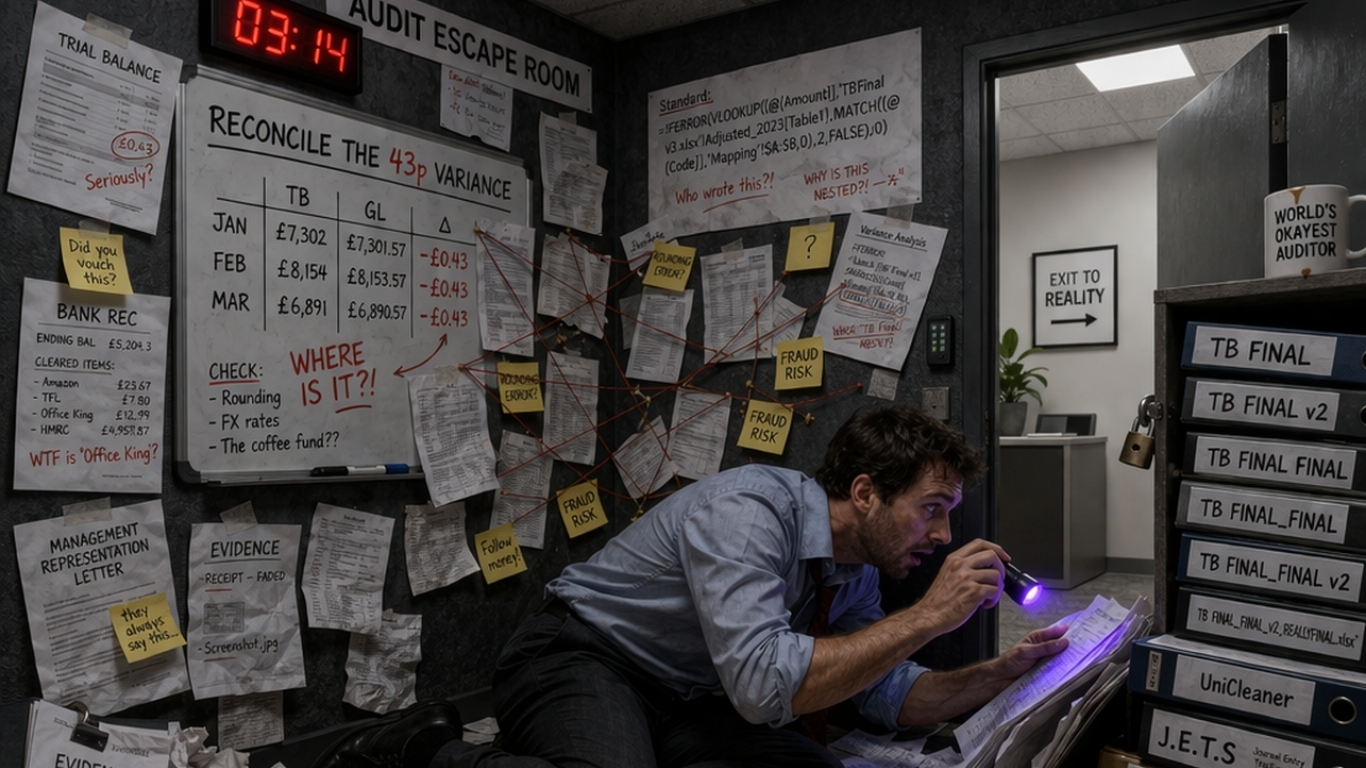
The next time you find yourself writing a nine-page memo to explain a 50-pence variance, pause.
Step back from the corkboard.
Because when the evidence is real, you don’t need the red string.
You just need the receipt.
Until next time,
Christiaan
.png)








































































.png)
.png)
.png)


.png)
.png)
.png)







Help your team work faster in Microsoft Excel without
sacrificing control, traceability, or audit quality.
Inspiration not perspiration with tips and insights to audit smarter, straight to your inbox.
You can unsubscribe at any time. We respect your information and won’t share your data with any 3rd parties. Learn more about our privacy policy.

.svg)

.png)
