

The story is old, but it survives because it never stops being true.
A traveler is walking through the woods and hears the rhythmic, exhausting thud of metal hitting wood. He finds a woodcutter swinging wildly at a massive oak tree. The man is drenched in sweat, completely exhausted, and making almost no progress.
The traveler watches for a moment, noticing the blade is completely blunt.
"Excuse me," the traveler says. "Your axe is dull. If you stop for five minutes to sharpen it, you'll cut that tree down in half the time."
The woodcutter doesn't even look up. He just swings again, panting.
"I can't stop," he snaps. "I'm too busy chopping wood to sharpen my axe."
We laugh at the absurdity of the woodcutter. We shake our heads at his stubbornness.
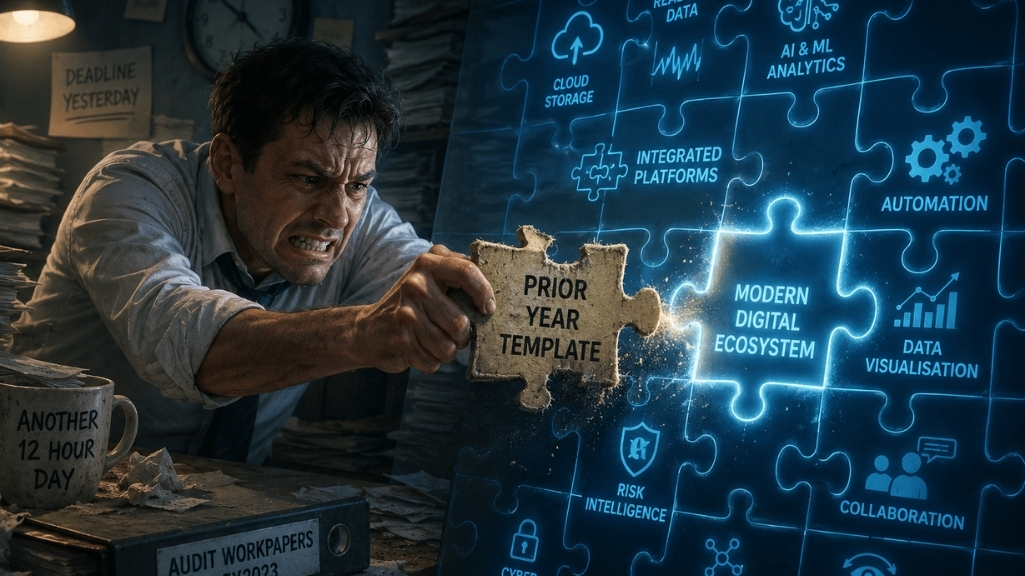
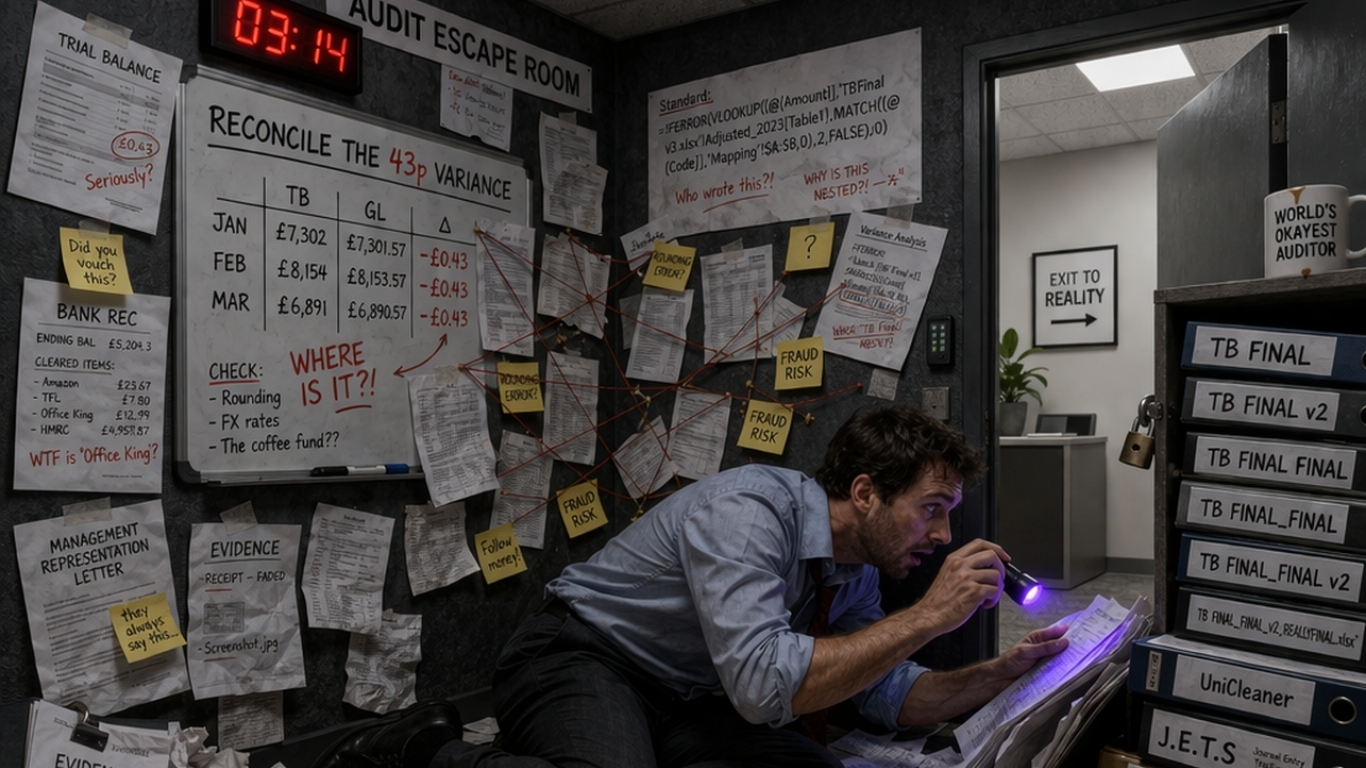
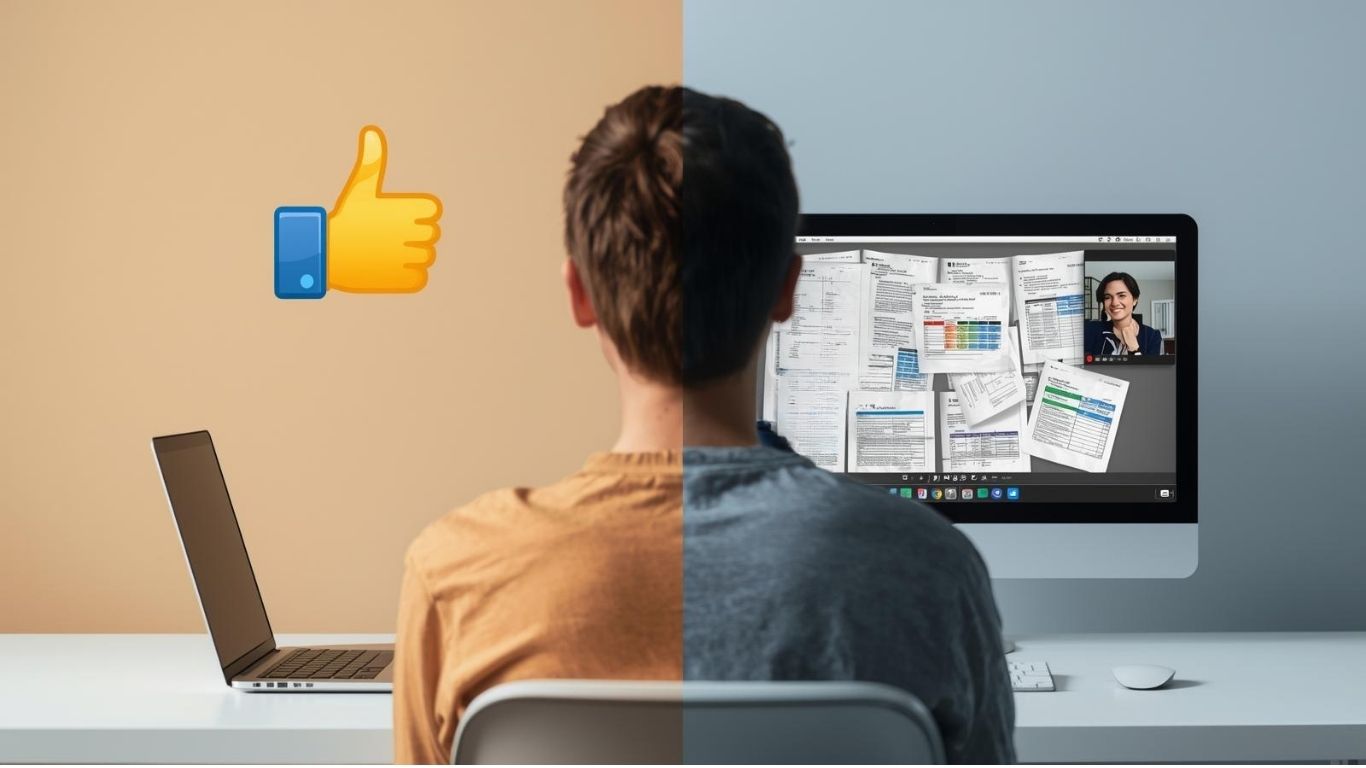
And then Friday night rolls around. You are sitting at your desk at 8:30 PM, surviving on a lukewarm slice of Hawaiian pizza, manually cleaning a broken trial balance.
Someone taps you on the shoulder and mentions a tool that could automate the whole thing in seconds.
Your immediate, visceral reaction?
"Please go away. I’m way too busy to look at that right now."
But let’s look a little deeper into the psyche of an auditor. Why do we aggressively push away the exact things that will save us?
It isn't arrogance. It isn't a refusal to innovate.
It is fear.
Fear of unseen breakages. The terrifying thought that a hidden glitch will silently fracture a workflow you have spent years trying to stabilise.
Fear of a new system dropping a critical transaction. The anxiety that an automated process will quietly omit a key record, leaving an invisible hole in your population right when a regulator steps in to inspect the file.
Fear of learning something new. The exhausting prospect of having to master an entirely new methodology when your cognitive battery is already flashing red at midnight.
The manual grind, as miserable, slow, and soul-crushing as it is, is a predictable pain. You know exactly how long the misery will take. You know how the spreadsheet behaves.
For an auditor, whose entire career is built on the systematic mitigation of risk, the "unknown" isn't a promise of efficiency. It feels like a threat to the absolute integrity of your sign-off.
Learning a new workflow means stepping into the unknown. And for an auditor whose entire career relies on mitigating risk, the "unknown" feels like a threat.
So you keep swinging the blunt axe. Not because you love the effort, but because the effort feels safe.
But here is the truth: you don't have to be scared of the transition, and you do not have to carry the weight of it alone.
Until next week,
Christiaan
.png)




























































.png)
.png)
.png)


.png)
.png)
.png)







Help your team work faster in Microsoft Excel without
sacrificing control, traceability, or audit quality.
Inspiration not perspiration with tips and insights to audit smarter, straight to your inbox.
You can unsubscribe at any time. We respect your information and won’t share your data with any 3rd parties. Learn more about our privacy policy.

.svg)

.png)
