

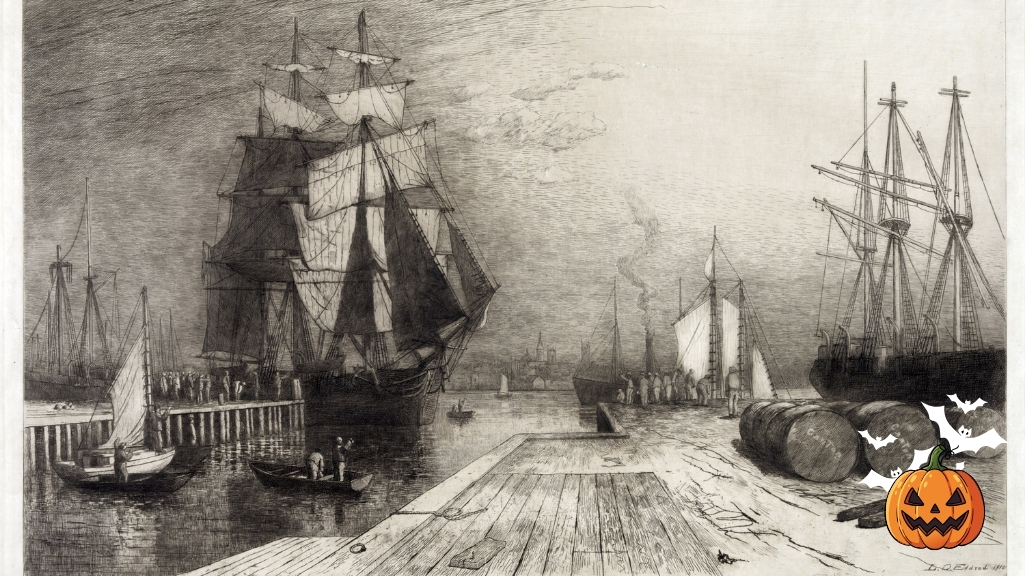
In 1956, a cargo ship sat waiting in a New Jersey port while hundreds of dockworkers moved freight piece by piece into its hull.
Crates were lifted individually. Barrels were rolled manually. Paperwork changed hands endlessly. Every item had to be touched, checked, moved, stacked, recorded, and moved again. Entire ports operated like this for decades, not because anyone believed it was efficient, but because nobody could imagine another way for global trade to function.
What makes this moment in history so fascinating is that the ships themselves were never really the problem. Neither were the workers. The real issue was the handling. Cargo spent more time being transferred, sorted, repositioned, and managed than it did actually moving across the ocean. But because the process had existed for so long, the inefficiency disappeared into routine. People stopped seeing it as waste and started seeing it as reality.
Then a trucking entrepreneur named Malcolm McLean asked a deceptively simple question: what if the cargo itself never needed to be unpacked and repacked at every stage of the journey? What if it could move inside one standardised container from beginning to end?
That single idea quietly transformed the global economy.
Not because ships suddenly became faster. Not because humans suddenly worked harder. But because millions of unnecessary interactions disappeared almost overnight. Fewer handoffs. Fewer delays. Fewer opportunities for confusion, damage, loss, and rework. The breakthrough was not speed. It was continuity.
As we close out May and our theme of The Architecture of the Impossible, I keep thinking about how often audit still resembles those pre-container ports. Not in effort or capability, but in the sheer amount of handling that happens around the work itself.
Most auditors don’t identify the problem as a problem until they experience a workflow where it no longer exists.
A document gets downloaded, renamed, reattached, reformatted, reviewed in one place, signed off in another, stored in a different folder, and revisited weeks later because one small dependency changed upstream. Evidence moves through multiple environments. Information gets carried manually between systems that were never designed to speak naturally to each other. And over time, auditors become so accustomed to the movement surrounding the work that the movement itself stops feeling unusual.
But that is often how invisible inefficiency survives. Not through dramatic failure, but through repetition. Through processes so familiar that nobody pauses long enough to ask whether all the handling was ever necessary in the first place.
The most interesting part of the shipping container story is that, once the new model worked, the old one became incredibly difficult to justify. Ports that once took days to process cargo suddenly did it in hours. Entire industries reorganised themselves around a structure that removed unnecessary transfer points. The world did not become simpler overnight. It became more connected.
And perhaps that is where modern audit is heading too.
Not toward a future where judgement matters less, but one where judgement is no longer buried beneath layers of administrative movement. A future where the workflow itself carries more of the operational weight so auditors can spend more of their energy where it was always meant to go: understanding, questioning, analysing, concluding.
Because mastery was never supposed to be measured by how much complexity a professional could endure manually. Sometimes the real breakthrough arrives when the unnecessary handling finally stops.
Welcome to June.
Until next week,
Christiaan
P.S. If you’d like to see what audit looks like when information moves through one connected structure instead of being endlessly transferred between disconnected processes, we’d love to show you here.
.png)




































































.png)
.png)
.png)


.png)
.png)
.png)







Help your team work faster in Microsoft Excel without
sacrificing control, traceability, or audit quality.
Inspiration not perspiration with tips and insights to audit smarter, straight to your inbox.
You can unsubscribe at any time. We respect your information and won’t share your data with any 3rd parties. Learn more about our privacy policy.

.svg)

.png)
