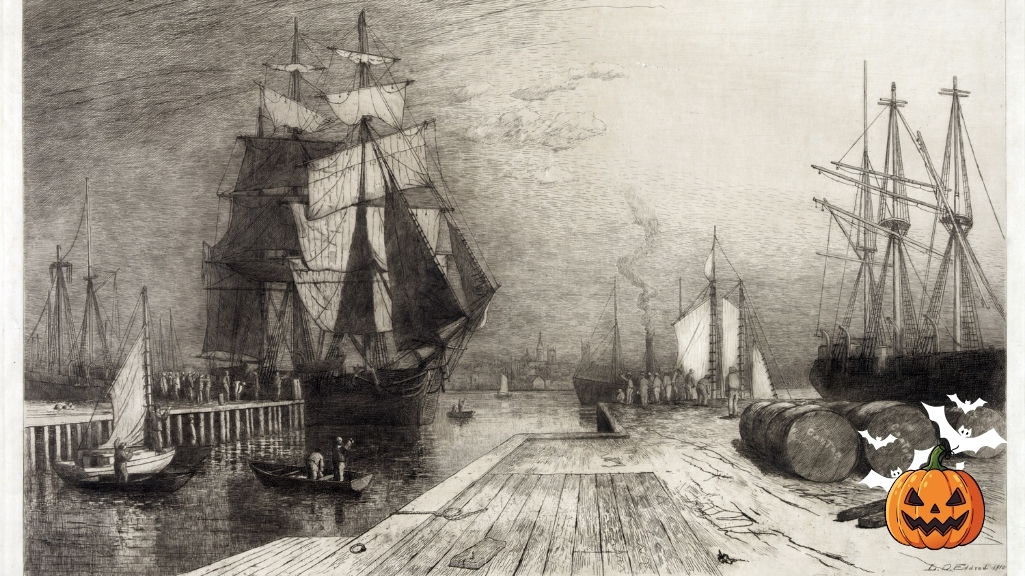
Somewhere off the south-eastern coast of the United States lies a stretch of ocean with a very dark reputation.
Draw a triangle between Miami, Bermuda and Puerto Rico, and the legend says you have mapped the boundary of the unexplained. Ships sail in and never sail out. Planes fly in and vanish from the radar. Compasses spin, radios fall silent, and entire crews are swallowed by something unseen.
The most famous chapter is December 1945. Five US Navy bombers, known as Flight 19, took off on a training flight and never came home. Even the rescue aircraft sent to find them disappeared. For decades, the story fed the idea of a supernatural force hiding in the Atlantic: the Bermuda Triangle.
The truth, once again, is far more ordinary.
When investigators examined the numbers, the mystery began to dissolve. Lloyd's of London did not find an unusual pattern of lost ships, and does not charge higher rates for vessels passing through. US Coast Guard records support the same conclusion, describing the disappearances as relatively insignificant compared with the heavy traffic that crosses the area every day.
Researcher Larry Kusche went further. He found that the number of ships and aircraft reported missing was not significantly greater, proportionally, than in any other busy part of the ocean. Many of the "Triangle" incidents had actually happened well outside it, and the legend had been inflated by sloppy research.
Even Flight 19 has an earthly explanation. Navy investigators attributed it to navigational error, which left the aircraft running out of fuel as the weather turned stormy.
There was no supernatural force. The "mystery" was a mix of poor record-keeping, unpredictable weather, and human error.
We shake our heads at the legend. Yet every Friday night, audit teams quietly sail into their own Bermuda Triangle.
You have a transaction, but the invoice is gone. You have a balance, but the contract has vanished. The evidence you need is somewhere between a SharePoint folder, a messy client portal, a Slack thread from three weeks ago, and an email that nobody replied to. The hours drain away while the document seems to be actively evading you.
Like the legend, the problem is not paranormal. The evidence has not been swallowed by the void. It simply was never recorded, labelled, or organised in a way that anyone else could follow.
The cure for a haunted evidence trail is the same as the cure for a haunted ocean: better records. When every working paper is annotated with firm-compliant tick marks from one central library, the next reviewer can see exactly what was tested, what was agreed, and what was signed off, without sending out a search party.
Stop hunting for evidence like a paranormal investigator. Standardise it, and get your Friday nights back.
Until next week,
Christiaan
Next week: the final chapter of October. We turn the lights on.
Standardise the Evidence Trail with Ticking and Bashing
Hunting for missing evidence shouldn't require paranormal investigation skills. If your team's annotation and sign-off process differs from file to file, it's time to standardise.
Ticking and Bashing simplifies the annotation, review and sign-off of final documentation in the audit file using centralised libraries and firm-compliant tick marks.
• One central library of tick marks for the whole firm.
• Annotation and sign-off that every reviewer can follow.
• Final documentation that is consistent from file to file.
Ticking and Bashing is part of the Audit Toolbar's Document Management workflow, which recovers 6-8 hours per audit. Book a demo and see it in action.














































































Help your team work faster in Microsoft Excel without
sacrificing control, traceability, or audit quality.
Inspiration not perspiration with tips and insights to audit smarter, straight to your inbox.
You can unsubscribe at any time. We respect your information and won’t share your data with any 3rd parties. Learn more about our privacy policy.