

Gather ‘round.
Picture it: a moonlit fog rolls over San Jose, California. From the sprawling, jagged silhouette of the Winchester mansion, a relentless, echoing thud... thud... thud rings out into the night. For thirty-eight years, the hammers never stopped.
Sarah Winchester was building a terrifying, senseless labyrinth designed to outsmart the dead.
Staircases twisted upwards into the darkness, only to dead-end into solid ceilings. Heavy oak doors opened onto sheer two-storey drops or impenetrable brick walls. Claustrophobic corridors looped endlessly back onto themselves.
The legend was chilling. Sarah, they whispered, was being hunted by the vengeful spirits of those struck down by the Winchester rifle. This chaotic, maze-like architecture was her only defence, a desperate attempt to trap the phantoms tracking her through the shadowy halls.
It is the perfect campfire ghost story. The only problem? It is a complete fabrication.
Historical records and architectural analyses reveal a far less supernatural truth. Sarah was not fighting off poltergeists. She simply possessed an astronomical fortune, zero formal architectural training, and a habit of firing her builders on a whim.
Crucially, she never had a master blueprint.
If she wanted a new room, she simply bolted it onto the existing structure. If a staircase was suddenly in the way, she sealed it over in the dark. The mansion was not a paranormal fortress; it was the inevitable, chaotic mutation of decades of reactionary construction.
We laugh at the absurdity of building a door that opens into a brick wall. Yet, audit teams voluntarily walk into the digital equivalent of the Winchester house every single morning.
Welcome to the 50-tab legacy Excel workbook.
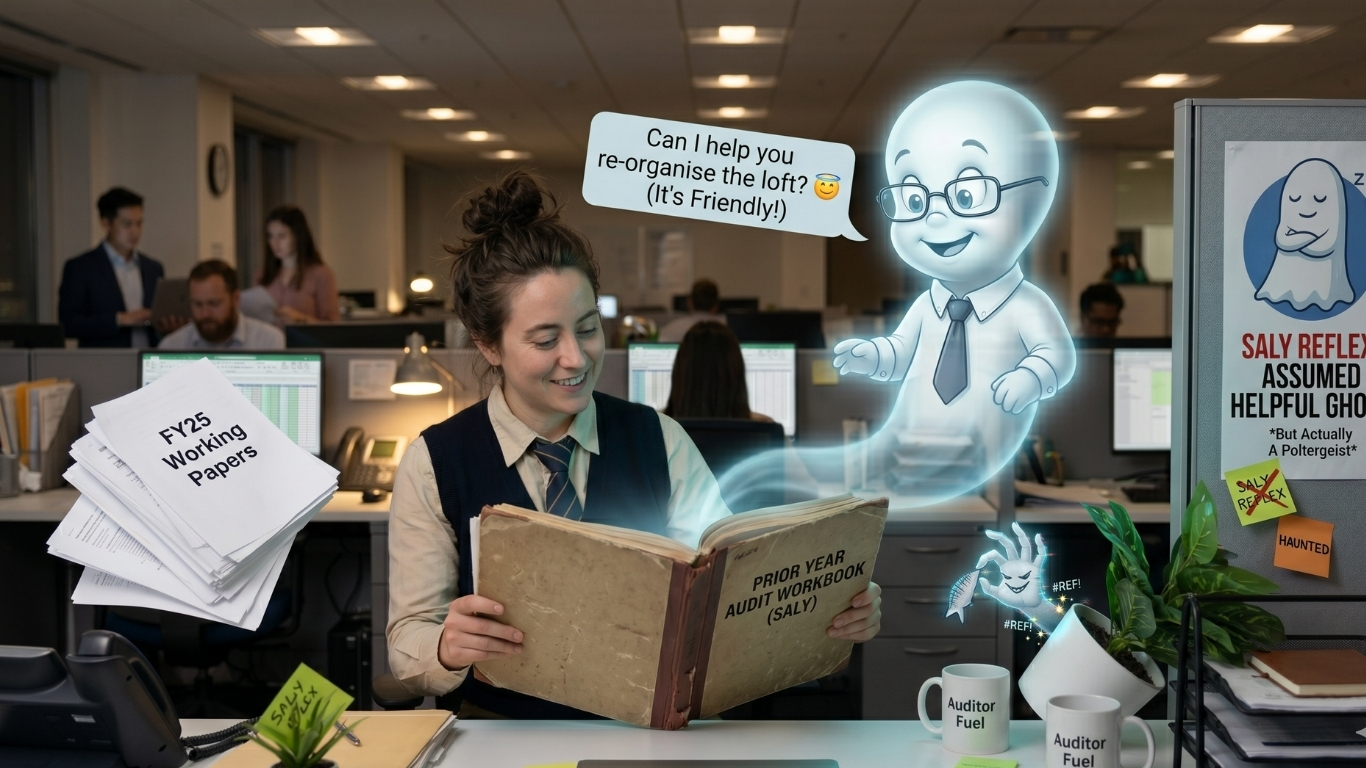
When a new auditor opens this file for the first time, they treat it exactly like a haunted house.
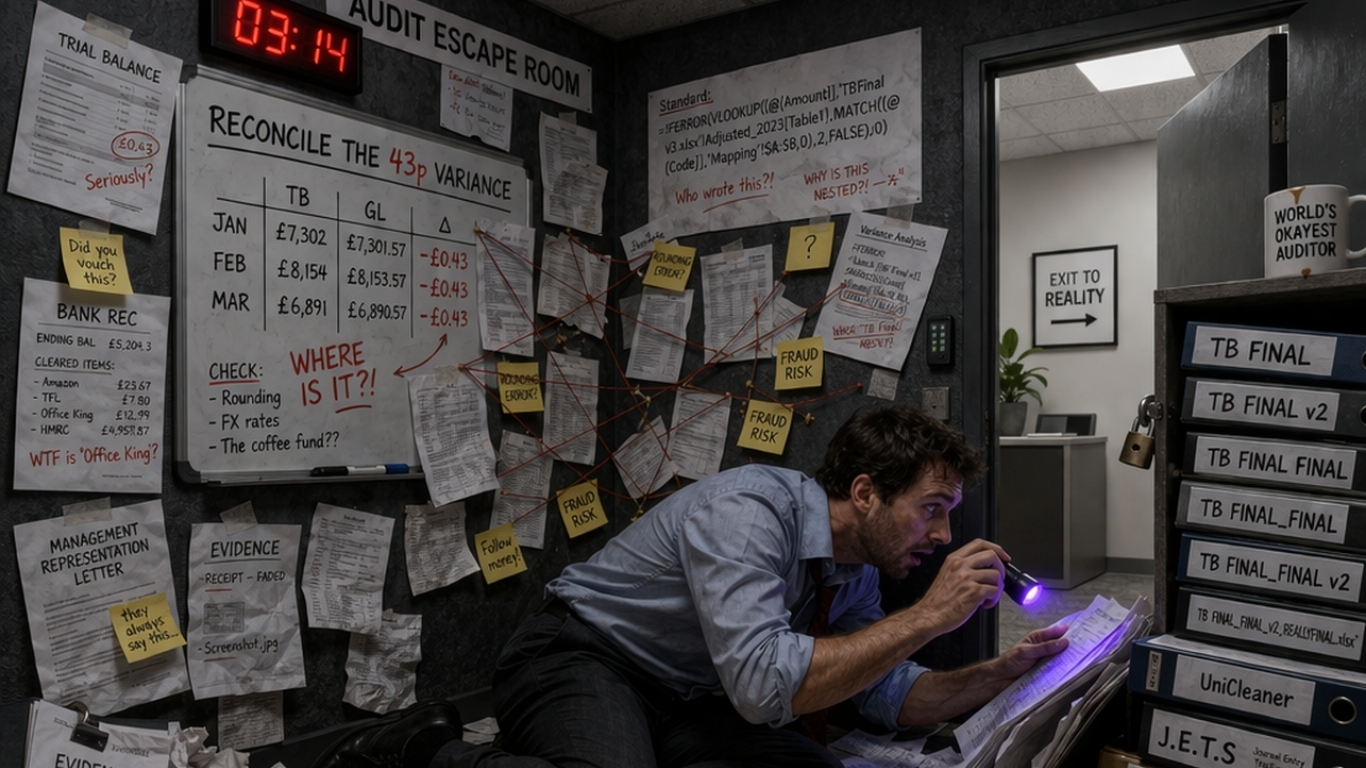
They creep through the cells, confronted by an intimidating web of circular references lurking in the shadows. They brace for jump scares from nested macros that trigger without warning, and they shudder at the phantom, hidden sheets dictating numbers from the void.
They assume it is a delicate, terrifying ecosystem. They tiptoe through the workbook in absolute silence, paralysed by the fear that clicking the wrong cell will awaken an ancient curse and bring the whole structure crashing down.
But just like the Winchester mansion, there are no ghosts in the spreadsheet.
Stop navigating labyrinths and start working from a master blueprint. Build smart, not scary.
Until next week,
Christiaan
Take the fear out of your workflows with Template Management and the Central Management Portal.
By allowing firm leadership to centrally control, monitor, and dynamically synchronise standard audit templates directly within Excel, you ensure that every single auditor is building on a solid, ghost-free foundation.
Discover how central template control reduces review turnarounds and eliminates broken links before they happen.
.png)




































































.png)
.png)
.png)


.png)
.png)
.png)









Help your team work faster in Microsoft Excel without
sacrificing control, traceability, or audit quality.
Inspiration not perspiration with tips and insights to audit smarter, straight to your inbox.
You can unsubscribe at any time. We respect your information and won’t share your data with any 3rd parties. Learn more about our privacy policy.

.svg)

.png)
