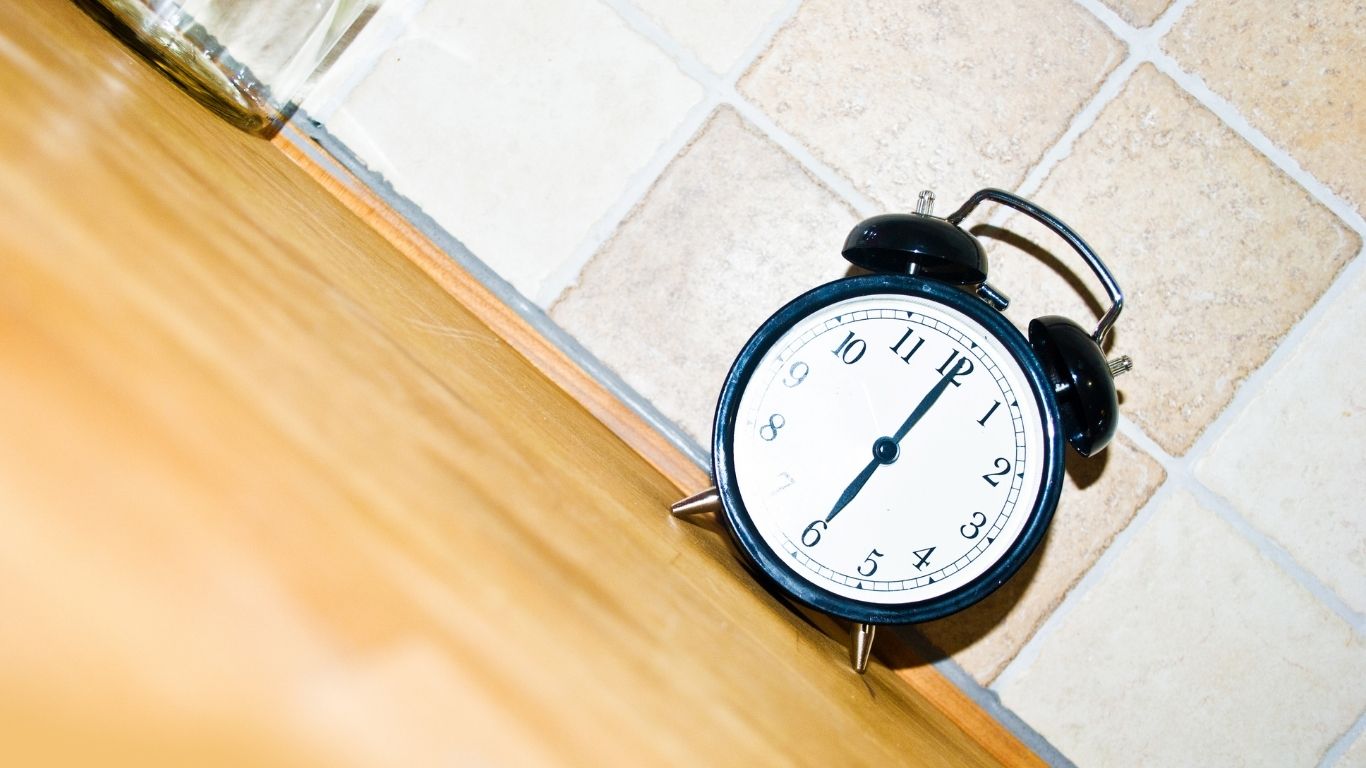
It always starts after midnight.
The house is silent. Then, from somewhere deep inside the wall behind your headboard: BANG. A pause. BANG-BANG-BANG. Furious, rhythmic, and unmistakably deliberate.
You hold your breath. The bedroom that felt so comfortable at bedtime has turned cold. Not everywhere, just one corner by the window, where the air feels like a hand pressed against your skin.
For centuries, families lay awake in exactly this situation. They told of poltergeists: restless spirits hammering aggressively inside the walls, leaving terrifying cold spots in the bedrooms where no draught should be. Entire households learned to dread the night.
The truth, however, is far less supernatural and far more mechanical.
The banging was water hammer. In old plumbing systems, when a tap or valve shuts suddenly, the moving water stops dead and sends a pressure spike rattling through the pipes. Add pockets of trapped air, and the pipes knock, shudder, and slam against the wooden framing behind the wall.
The cold spots were just as ordinary. Poorly insulated windows leak the winter air straight into the room, creating pockets of chill in precisely the corners where the story said a ghost was standing.
There was no poltergeist. The "monster" was structural noise: trapped air, pressure spikes, and a house that was not built to keep quiet.
We smile at the families who lay awake fearing a plumbing fault. Yet audit teams have the same sleepless relationship with the General Ledger.
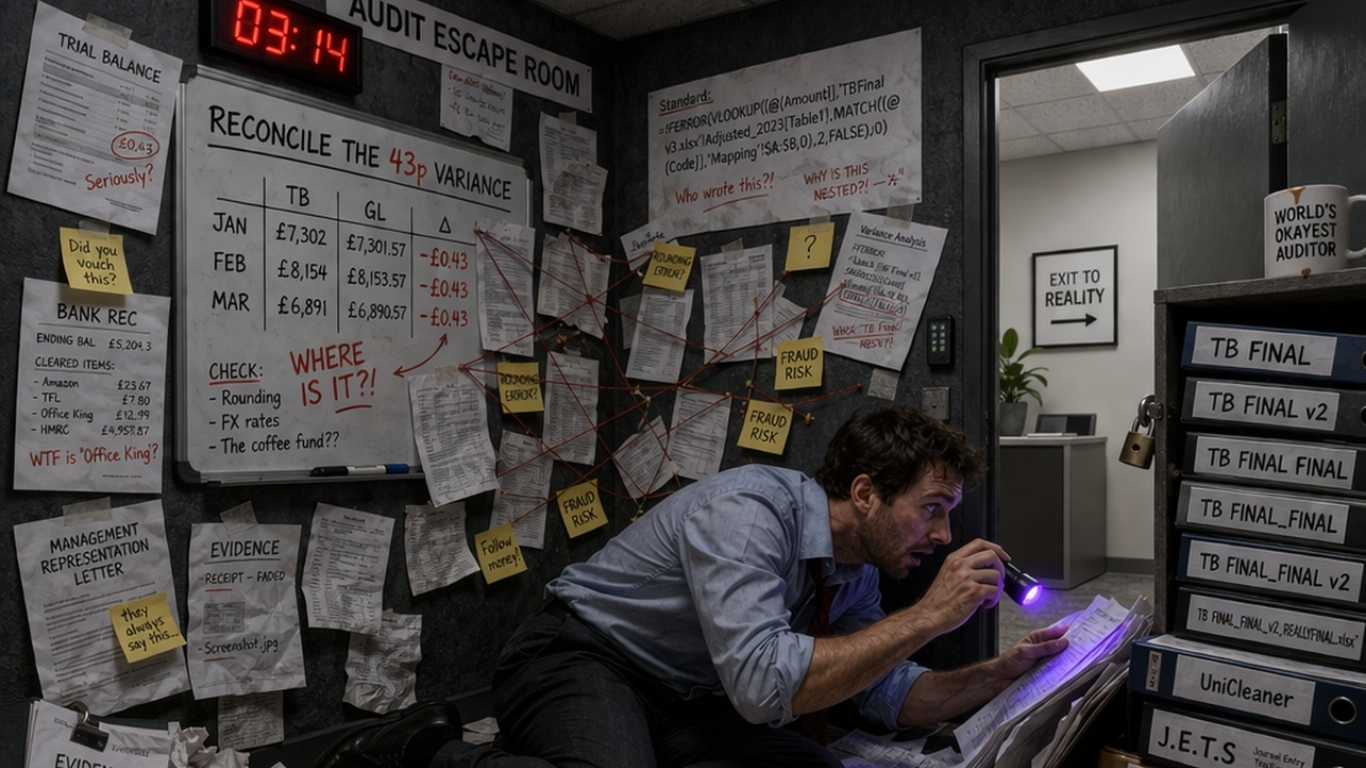
You pull the GL and it is packed with reversed accruals, corrected errors, and phantom transactions. It bangs and clatters on every page. It feels as though the ledger is aggressively fighting you, so the team does what frightened families always do: they spend hours wrestling with it by hand.
But look closely at what is actually making the noise. Much of it is just that: noise. Entries that reverse, mistakes that were already corrected, movements that have zero actual impact on the balance. It is loud, it is alarming, and it is not a ghost.
The real danger is that when everything is banging, you can no longer tell the harmless knocks from the genuine fault. A plumber doesn't tear down every wall in the house. They listen, find the actual break, and fix it.
In a workbook, the real breaks are quieter. A formula that quietly stops doing what you think it does. A data structure that is slightly out of shape. Silent right up until the moment something bursts and the whole workflow stops.
This is why we built Error Catching: it proactively identifies potential errors in formulas and data structures before they break your workflow. You stop chasing every sound in the walls and start looking at the places that genuinely need attention.
Stop chasing ghosts. Find the real fault.
Until next week,
Christiaan
Next week: ships, planes, and a very missing invoice. Something is vanishing in the Bermuda Triangle.
Silence the Noise with Error Catching
Not every bang in the walls is a ghost, and not every anomaly in your data is a real problem. The skill is telling them apart before the pipe bursts.
Part of the Audit Toolbar's Analytics workflow, Error Catching proactively identifies potential errors in formulas and data structures before they break your workflow.
• No more finding a broken formula only after it has already broken.
• No more tracing structural faults by hand through a noisy workbook.
• No more chasing every sound in the walls.
The Analytics workflow recovers 10-20 hours per audit. Book a demo and see Error Catching in action.


























































Help your team work faster in Microsoft Excel without
sacrificing control, traceability, or audit quality.
Inspiration not perspiration with tips and insights to audit smarter, straight to your inbox.
You can unsubscribe at any time. We respect your information and won’t share your data with any 3rd parties. Learn more about our privacy policy.