

You remember the exact taste of copper in the back of your throat.
It is a primal memory. Your lungs are burning, scraping for air. The woodchips are flying under your trainers, kicking up dust in the late afternoon sun. You do not dare look over your shoulder because you can already hear the heavy, rhythmic breathing of the "monster" mere inches behind you. The shadow of their outstretched hand is creeping up your spine. You are cornered. You are entirely out of options.
So, you surrender to the only strategy left. You lock your eyes on the massive oak tree at the absolute edge of the playground. You launch your body forward, diving desperately through the air, slapping your palm flat against the rough, splintered bark, and you scream the magic word:
"Safe!"
And in that exact fraction of a second, the universe bends to your will. The chase instantly suspends. The monster stops dead in their tracks, chest heaving, legally obligated to leave you alone. It does not matter how fast they were running or how terrifying they seemed. By simply touching the wood of that designated tree, you are granted absolute, unquestionable immunity. You trade the genuine danger of the wild for the comforting, artificial illusion of a boundary.
We like to pretend we outgrew that frantic, desperate playground logic the day we put on a suit and passed our board exams.
We didn't. We just gave the monster a new name: the General Ledger.
There is a strange, deeply philosophical reality about the audit profession that we rarely admit out loud. We are trained to be elite financial investigators, arbiters of truth. But the moment a client drops a feral, three-million-row, completely unstructured data export into our inbox, a quiet, primal panic sets in. We look at the raw chaos of the business landscape, and instead of stepping forward to hunt the anomalies, we sprint for the nearest oak tree.
While you are hiding behind last year's assumptions, the data is mutating. The risk profile has shifted. The phantom transactions, the reversed accruals, and the buried journal entries do not care that your hand is touching the tree. Hiding in a legacy template doesn't make you invincible; it just makes you blind.
It is time to stop playing tag with your client's data.
You don't need a safe base to hide behind; you need the infrastructure to go on the offensive.
When you have a system that automatically elevates fraud testing and visualises the risky patterns for you, you stop running from the monster. You turn around, look it in the eye, and start doing the high-level analysis you were actually trained to do.
As we’re about to close the door on September, the light outside is changing. The evenings are drawing in, and the shadows are lengthening across the office floor.
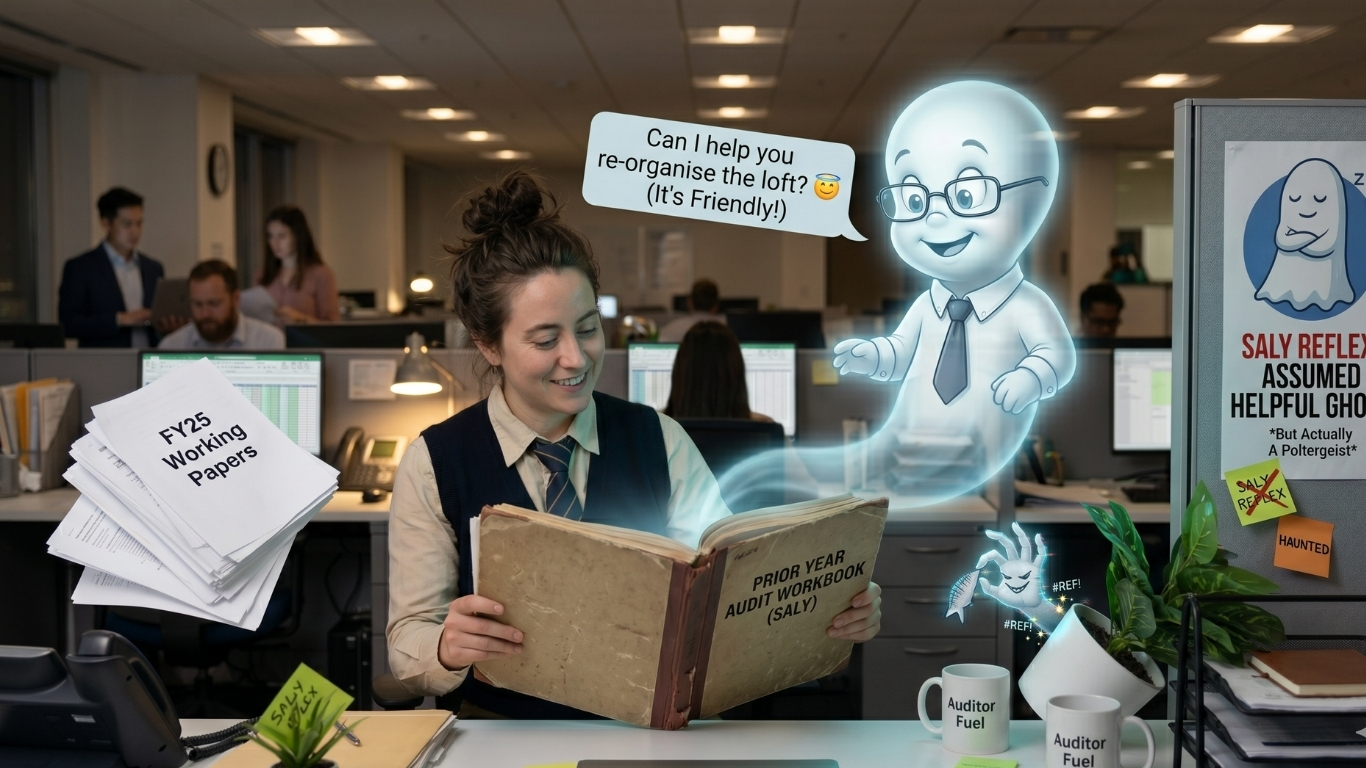
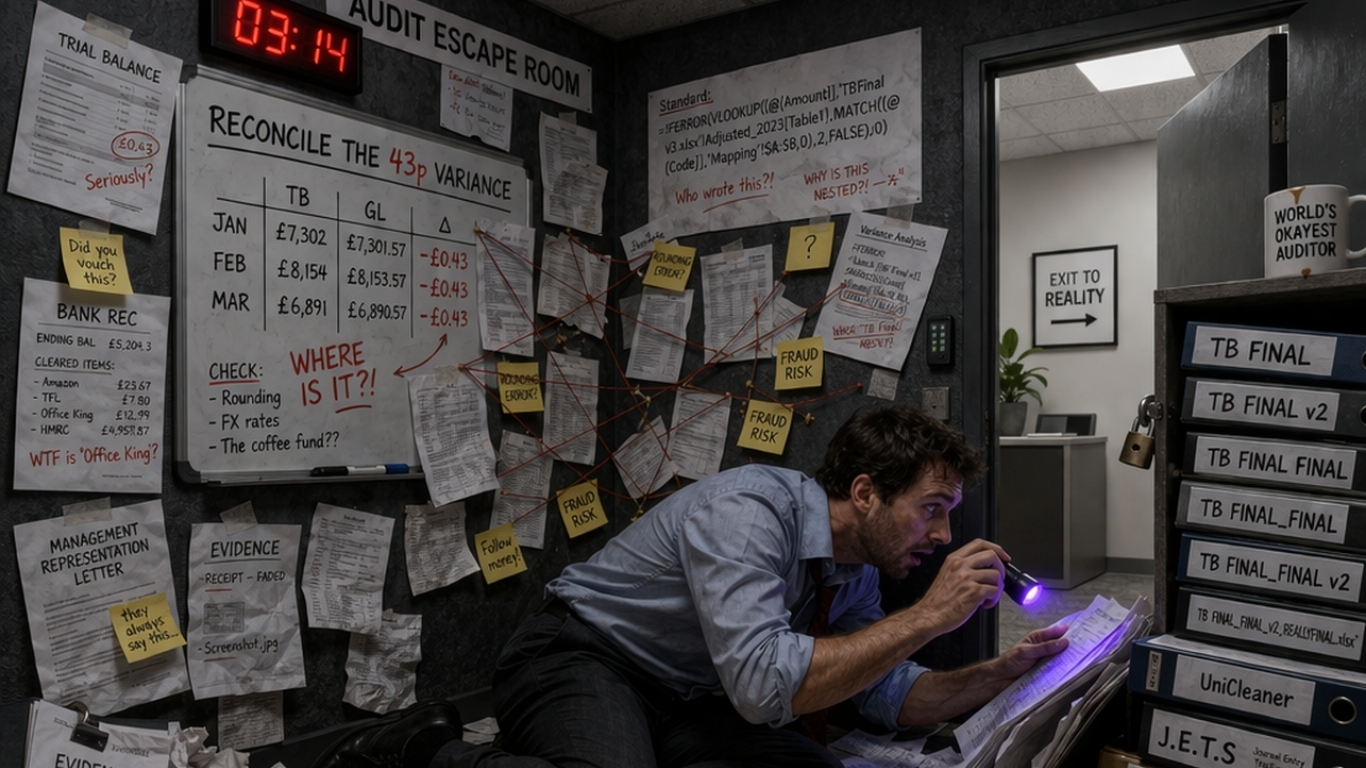
Next month, we are going to lean fully into the dark, lifting the floorboards of our legacy files and examining the literal ghosts, spectres, and audit myths that haunt our workflows. But before the month turns, ask yourself what you are still running from. What outdated template, what inherited process, what broken spreadsheet are you clinging to simply because letting go feels too exposed?
Comfort is not clarity. The illusions we use to make ourselves feel safe are the exact same walls that keep us trapped in endless, repetitive cycles. The cost of hiding behind the old oak tree is that you never learn how to actually master the field.
Let go of the tree. The game is over. It is time to step into the clearing.
Until next week,
Christiaan
.png)



































































.png)
.png)
.png)


.png)
.png)
.png)









Help your team work faster in Microsoft Excel without
sacrificing control, traceability, or audit quality.
Inspiration not perspiration with tips and insights to audit smarter, straight to your inbox.
You can unsubscribe at any time. We respect your information and won’t share your data with any 3rd parties. Learn more about our privacy policy.

.svg)

.png)
